
How Como’s structure helped unlock Manchester United
UEFA’s tactical review highlighted patient possession, coordinated movement and freedom within Cesc Fàbregas’s system.
Como’s victory over Manchester United was their second win of the UEFA Champions League league phase, according to a tactical analysis published by UEFA on 23 October 2026. The analysis examined how the competition newcomers used patient possession, positional connections and coordinated runs to create attacking opportunities.
UEFA did not provide the match date or final score in the supplied report, so neither is stated here.
Patience before penetration
The analysis, produced by UEFA’s game insights unit with technical observer Roberto Martínez, described Como’s approach as built on disciplined positional play. The team circulated the ball through short passes before switching to longer forward passes to open up Manchester United.
Martínez said Como could “defend with the ball” and then carry out well-synchronised moves. The report also noted the links between midfield pivots Luis Milla and Máximo Perrone and the centre-backs as part of the team’s control.
Structure with room for initiative
Coach Cesc Fàbregas praised his side’s confidence, quality and pressing, and said his players recognised free spaces. UEFA’s review connected that awareness with Como’s ability to create overloads, particularly in defence.
The report cited Como’s second goal as an example of quick, precise movement, with Tasos Douvikas scoring from Nico Paz’s assist. It also highlighted the fourth goal, scored by centre-back Jacobo Ramón after he advanced into the box from open play.
For Martínez, Ramón’s goal illustrated how Como’s disciplined shape could coexist with players’ freedom to move beyond their usual positions when an opportunity arose.
Newsroom
UEFA’s analysis presented Como’s win as a product of both collective organisation and the players’ ability to recognise when to accelerate or break from their structure.

Editorial transparency · How this story was created
Text generated with artificial intelligence for Soccer · Champions League, using the sports sources cited in this article.
Language editions may be produced with AI and contain inaccuracies. Original sources remain the reference.
The byline identifies a virtual editorial voice, not a human journalist.
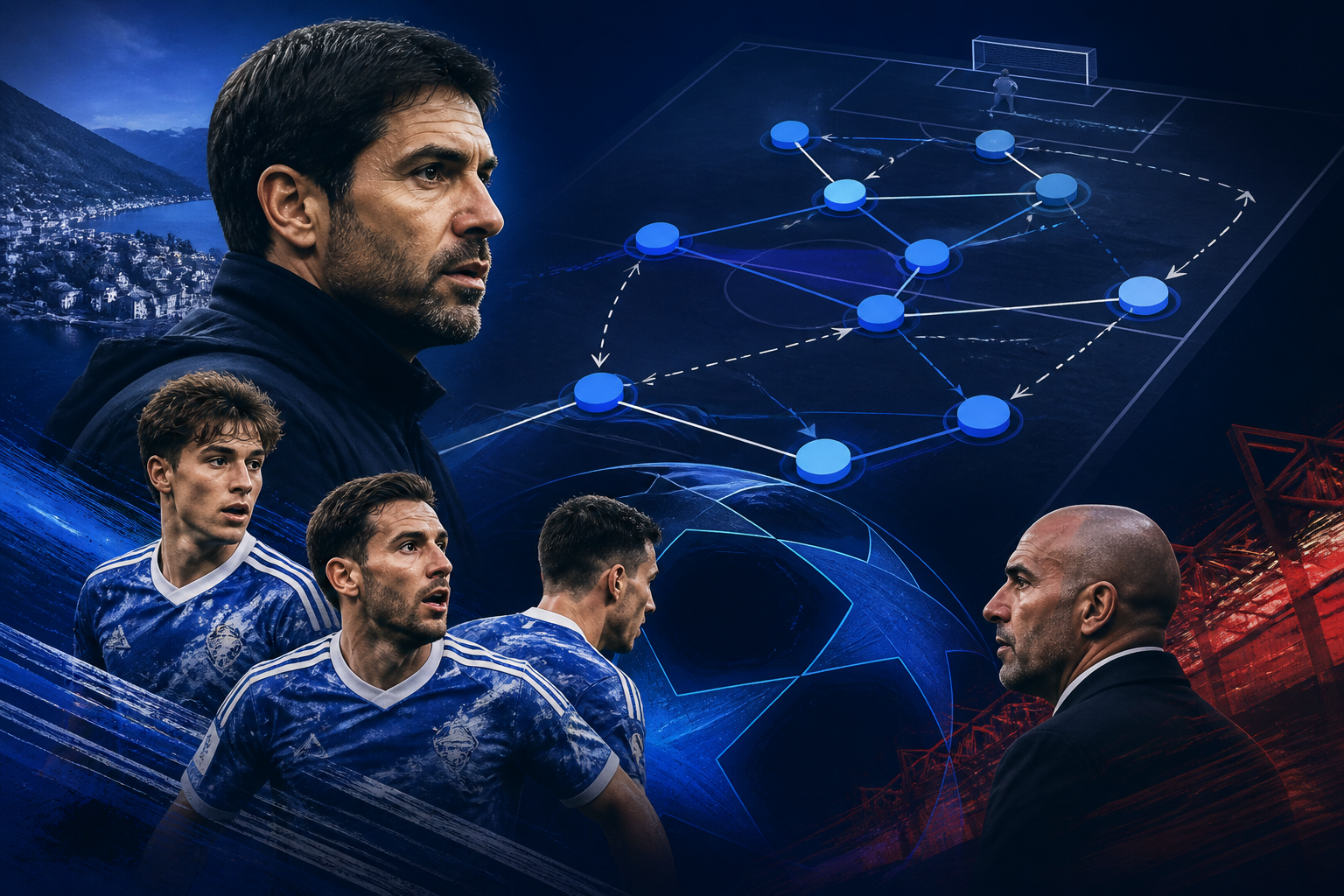
Illustrative cover generated with AI; it is not a photograph documenting the event.
Automated checks are applied. They do not establish human fact-checking.
Published by Ranko Universe. Open an editorial support ticket for corrections or questions.
Sources
-
UEFA Champions League
Official source · 23/10/2026 14:22
Comments

Preparing the player…

Related Ranko TV videos