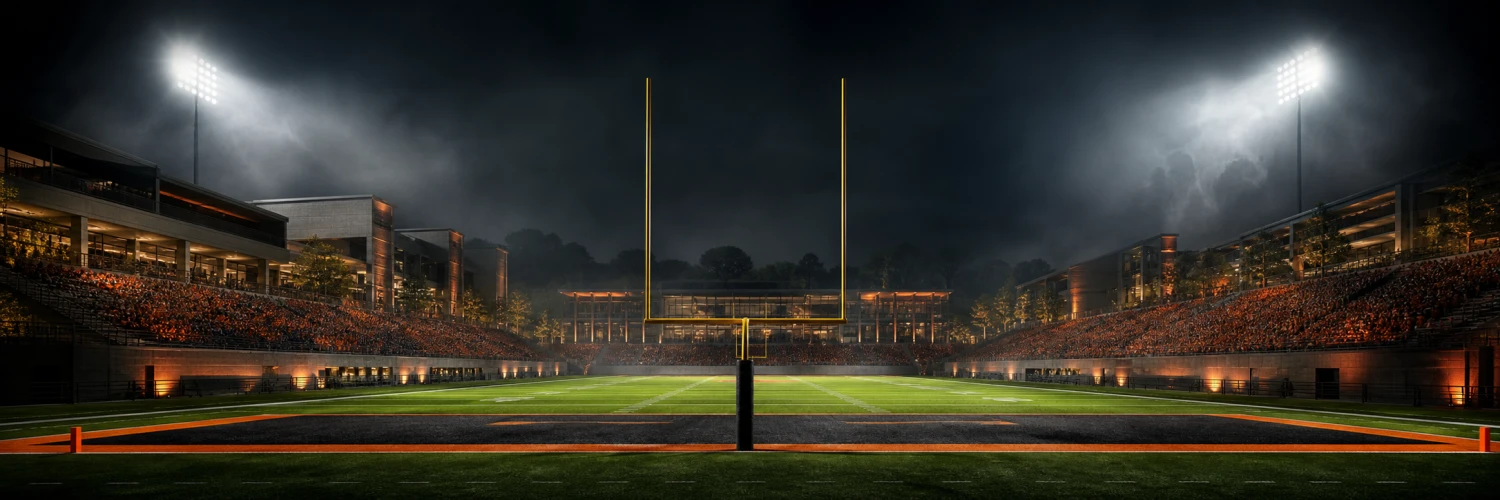



Regular Season Stats: the numbers that defined Madden’s first full march to the Playoffs
After Week 18, the season belongs to the box score: the Cardinals set the pace, the Cowboys and Seahawks kept the pressure high, and the league’s elite made their case in points, balance and disruption.
The Regular Season is over, and in Madden that means the loudest arguments now belong to the numbers. The Cardinals finished as the benchmark at 17-0, piling up 776 points and a staggering +400 differential, while the Cowboys and Seahawks built their own elite cases with offense-heavy profiles that never really let the league settle.
If the table showed hierarchy, the player leaders explained the force behind it. Josh Allen, Jalen Milroe and Kyler Murray drove the passing race; Antoine Terry, De’Von Achane and Trey Benson lit up the ground game; and Brian Thomas Jr., CeeDee Lamb and Emeka Arroyo gave the league a receiving standard that was hard to match.
That is the real footprint of Week 18: not a single closing result, but a completed body of work. The regular season did not merely sort the contenders — it separated the teams built to score from the teams built to survive, and, just as importantly, showed which defenses could still impose themselves when the pace rose.
Arizona’s perfect season was not just a record — it was a statement
The Cardinals finished the regular season as the one team that never surrendered control. Seventeen wins from seventeen, 776 points for and only 376 against: that is the profile of a side that did more than win games, it dictated them. The +400 differential is the loudest number in the league, but the cleaner message is even simpler: Arizona could hurt opponents in every phase and rarely had to apologize for the result.
That kind of margin matters because it travels. In a Madden season, a perfect record often hides volatility; here, the Cardinals looked like the exception. The offense was the league’s most productive, and the defense was good enough to keep the shootout from turning into a gamble. When a team leads both the scoring race and the differential race, the regular season stops being a sample and starts looking like a blueprint.
The chase pack still had teeth, and Dallas and Seattle carried the loudest offenses
Behind Arizona, the Cowboys and Seahawks formed the most convincing offensive chase. Dallas closed at 15-2 with 640 points for, while Seattle went 14-3 and still reached 626 points scored, the kind of output that keeps a conference race honest. The Seahawks also posted one of the best net-point marks in the league at +244, a reminder that efficiency can be just as punishing as volume.
Dallas, though, looked like the league’s purest pressure offense. Antoine Terry’s 4,473 rushing yards sat atop the league and gave the Cowboys a weekly floor few opponents could match. Add Dylan Parks’ 96 passing touchdowns and CeeDee Lamb’s 2,603 receiving yards, and you get a team that attacked every layer of the field. Seattle answered with a different kind of threat, powered by Jalen Milroe’s passing volume and Emeka Arroyo’s outrageous 3,344 receiving yards, the season’s clearest proof that one receiver can tilt an entire statistical race.
The defensive race was tighter, and the Falcons made the most of it
If the offensive charts were defined by star power, the defensive side was built on resistance and timing. The Falcons finished as the best defensive team by points allowed with only 327 conceded, ahead of the Chargers at 367 and the Cardinals at 376. That matters because it tells us the postseason will not be decided by fireworks alone. The teams that can shorten drives, force hesitation and keep games inside the margin are still alive for a reason.
Atlanta’s profile is especially important because it shows how defense can stabilize a season that does not always need the league’s most explosive scoring total. The Falcons were not the highest-scoring side, but they were among the hardest to break down. In a bracket where the margins are usually thin, that kind of profile tends to age well. The Chargers fit the same mold in a different way: a 13-4 record, a top-three defensive mark and enough balance to remain dangerous even when the points totals were not the headline.
The individual leaders turned the regular season into a passing and scoring showcase
The quarterback race was one of the clearest symbols of how aggressive this season became. Josh Allen led the league with 9,781 passing yards, but he was chased hard by Jalen Milroe at 9,671 and Kyler Murray at 9,650. That trio alone says everything about the league’s offensive climate: no one was interested in controlling tempo for the sake of it, and the best teams kept their engines running until the final week.
Touchdowns told a similar story. Milroe and Murray each reached 98 passing scores, Dylan Parks followed with 96, and Allen added 93. Those are not just big totals; they are season-long declarations that certain offenses were built to force opponents into a response game. The same pattern appears in the rushing and receiving leaders, where Antoine Terry’s 4,473 yards on the ground and Emeka Arroyo’s 3,344 through the air sat at the top of their respective charts. The result is a regular season that felt less like a slow burn and more like a constant sprint.
The defensive playmakers mattered as much as the offensive stars
A good Madden season always needs disruption, and the leaderboards delivered it. Brian Young’s 28 sacks stood out as the most violent pass-rushing number of the year, while Will Anderson Jr. and J. Burch both reached 17.5. On the back end, D. Overshown and S. Revel Jr. tied for the interception lead with 11 apiece, with Brian Branch right behind on 10. That is the kind of spread that keeps offenses honest and keeps a championship path from becoming purely aerial.
Tackles and forced fumbles filled out the same picture. J. Carlies led tackles with 92, while Pete Becht, M. Sweat and T. Walker each produced five forced fumbles, the best mark in the league. Those numbers are not background noise; they are the margins that decide whether a contender survives a bad stretch or gets swallowed by it. When the regular season closes, the teams that can generate this kind of defensive event usually enter the Playoffs with a different emotional temperature.
What the regular season numbers say about the Playoffs now
The broad trend is unmistakable: the league’s best teams were not just winning, they were winning with identity. Arizona brought the cleanest overall profile. Dallas brought the most punishing offense. Seattle arrived with elite balance and explosive distribution. Atlanta, Los Angeles and Buffalo showed that defense still travels. That combination creates a postseason board where one hot quarterback will not be enough on its own; the best path will likely belong to the teams that can keep both sides of the ball in the conversation.
That is why the Wild Card phase begins with so much tension attached to these numbers. Regular season stats are not prophecy, but they are a reliable map. They tell us who could score in volume, who could absorb pressure, who could steal possessions and who could survive the grind without losing shape. After Week 18, the message is clear: the Playoffs are not starting from zero. They are starting from a season already written in touchdowns, sacks, takeaways and point differentials.
Newsroom
The regular season may be done, but its numbers are now the standard by which every playoff run will be judged. Arizona set the bar, Dallas and Seattle chased with force, and the defensive leaders reminded everyone that in Madden, control is still the most valuable skill of all.

People featured



Editorial transparency · How this story was created
This article was prepared by the automated Ranko newsroom using tournament data recorded on Ranko Universe at the time of generation. Subsequent updates or corrections may not yet appear here.
This report summarises the results and standings available when it was prepared.
Please report inaccuracies through Ranko Universe support channels.
Learn how the newsroom worksComments
Preparing the player…
Tournament card

Related Ranko TV videos
 PIT
PIT

 HOU
HOU